If you own property in Morrow County, Ohio, property taxes can feel confusing, overwhelming, and sometimes even frustrating you’re not alone. Many homeowners, buyers, and investors struggle to understand how property taxes are calculated, why rates change, and how to avoid costly mistakes.
In this complete guide, you’ll get clear, accurate, and easy to understand answers to all your Morrow County property tax questions. From tax rates and assessments to exemptions, due dates, and appeals, this guide promises to help you make informed decisions and potentially save money.
Ahead, we’ll walk you step by step through how Morrow County Ohio property taxes work, how to check your tax bill, what relief programs you may qualify for, and what to do if you believe your taxes are too high all in one place, with no guesswork.
Understanding the Morrow County Ohio Property Tax System
The property tax system in Morrow County follows Ohio state laws but is managed at the local level. Property taxes are the primary source of funding for schools, emergency services, road maintenance, libraries, and other essential public services. Every property owner contributes based on the taxable value of their property.
The Morrow County Auditor is responsible for determining property values and maintaining assessment records, while the Morrow County Treasurer handles billing and collections. If a property owner disagrees with their assessed value, the Board of Revision provides a formal appeal process.
Understanding how these offices work together is the foundation of this Morrow County Ohio Property Tax Complete Guide.
How Property Taxes Are Calculated in Morrow County
Property tax calculation in Morrow County follows a consistent formula used across Ohio. While the final bill varies by location, the calculation method remains the same for all properties.
Step by step calculation process:
- Determine the property’s fair market value
- Apply Ohio’s assessment rule (35% of market value)
- Apply total local tax rates (millage)
- Subtract any exemptions or reductions
Example calculation
| Item | Amount |
|---|---|
| Market Value | $200,000 |
| Assessed Value (35%) | $70,000 |
| Total Tax Rate | 1.60% |
| Estimated Annual Tax | $1,120 |
This example shows why location matters more than property value alone in determining your final tax bill.

Morrow County Ohio Property Tax Rates by Villages and Municipal Areas
Morrow County does not have large cities, but it includes several villages where property tax rates tend to be slightly higher due to municipal services such as road maintenance, utilities, and local administration.
Approximate Village Property Tax Rates
| Village | Approximate Property Tax Rate |
|---|---|
| Mount Gilead Village | 1.45% – 1.75% |
| Cardington Village | 1.35% – 1.65% |
| Marengo Village | 1.40% – 1.70% |
| Chesterville Village | 1.30% – 1.55% |
| Edison Village | 1.38% – 1.62% |
| Fulton Village | 1.25% – 1.50% |
Village properties often carry higher tax rates than rural areas because they receive additional municipal services.
Property Tax Rates in Morrow County Townships
Townships make up the largest portion of Morrow County. Property taxes in township areas are generally lower because they provide fewer municipal services compared to villages. Township tax rates still include county, school district, and voter approved levies.
Approximate Township Property Tax Rates
| Township | Approximate Property Tax Rate |
|---|---|
| Bennington Township | 1.30% – 1.55% |
| Canaan Township | 1.32% – 1.58% |
| Chester Township | 1.35% – 1.60% |
| Congress Township | 1.28% – 1.52% |
| Franklin Township | 1.40% – 1.68% |
| Gilead Township | 1.38% – 1.65% |
| Harmony Township | 1.29% – 1.54% |
| Lincoln Township | 1.34% – 1.60% |
| North Bloomfield Township | 1.31% – 1.56% |
| Perry Township | 1.36% – 1.63% |
| South Bloomfield Township | 1.30% – 1.55% |
| Troy Township | 1.42% – 1.72% |
| Washington Township | 1.33% – 1.60% |
| Westfield Township | 1.37% – 1.66% |
Township properties are often preferred by buyers looking for lower annual property taxes.
School District-Linked Property Tax Rates in Morrow County
School district levies represent the largest portion of property taxes in Morrow County. Two homes in the same township can have very different tax bills depending on the school district they belong to.
Approximate School District Property Tax Rates
| School District | Approximate Property Tax Rate |
|---|---|
| Northmor Local School District | 1.35% – 1.55% |
| Cardington Lincoln Local School District | 1.40% – 1.60% |
| Highland Local School District | 1.45% – 1.70% |
| River Valley Local School District | 1.50% – 1.75% |
| Mount Gilead Exempted Village School District | 1.48% – 1.72% |
| Buckeye Valley Local School District (Partial) | 1.42% – 1.65% |
School funding is the single biggest reason property tax rates vary across the county.
How to Check Your Property Tax Information in Morrow County
Property owners can easily access official tax records using county tools. This is a critical step in managing your taxes effectively.
You can search property taxes by:
- Owner name
- Property address
- Parcel identification number
Available information includes assessed value, payment history, exemptions, and current balances.
Understanding Your Morrow County Property Tax Bill
A property tax bill includes much more than a total amount due. Reviewing it carefully helps avoid surprises and errors.
Your tax bill typically shows:
- Property identification details
- Assessed and taxable values
- Individual levy amounts
- Total taxes due
- Payment deadlines
Property taxes are usually billed in two installments each year.
Property Tax Exemptions and Reductions
Many property owners qualify for exemptions but never apply. Exemptions reduce the taxable value of your property, lowering your overall tax bill.
Common exemptions include:
- Homestead Exemption
- Senior Citizen Relief
- Disability Exemptions
- Veteran Property Tax Benefits
- Agricultural CAUV Program
Applying on time is essential, as exemptions are not automatic.
How to Lower Your Property Taxes in Morrow County
Reducing property taxes legally starts with awareness and regular review. Many homeowners save money simply by checking their assessments.
Ways to reduce taxes:
- Review property assessments annually
- Correct errors in property records
- Compare similar properties
- Apply for exemptions
- File an appeal if overvalued
Property Tax Appeals in Morrow County
If you believe your property is assessed too high, Ohio law allows you to appeal.
Appeal process overview:
- File a complaint with the Board of Revision
- Provide evidence such as comparable sales
- Attend a hearing if required
- Receive a written decision
Successful appeals can reduce taxes for multiple years.
Delinquent Property Taxes and Foreclosure Risks
Unpaid property taxes result in penalties, interest, and potential foreclosure. Acting early can prevent serious consequences.
What happens if taxes go unpaid:
- Interest and late fees
- Tax liens placed on property
- Foreclosure proceedings
Payment plans may be available through the Treasurer’s office.
How Property Taxes Are Used in Morrow County
Property taxes support the entire community.
Tax revenue funds:
- Public schools
- Fire and emergency services
- Road maintenance
- Libraries and public facilities
Understanding this helps property owners see the value behind their tax payments.
Conclusion
Understanding property taxes is essential for every homeowner, buyer, and investor in the county. This Morrow County Ohio Property Tax Complete Guide was created to simplify complex tax concepts, explain local tax rates by village, township, and school district, and help you make informed financial decisions. By knowing how property taxes are calculated, where your tax money goes, and what exemptions or appeals are available, you can avoid costly mistakes and even reduce your tax burden. Staying informed, reviewing your tax records regularly, and using official county resources will help you manage your property taxes with confidence and long term peace of mind.
Frequently Asked Questions (FAQs)
How much are property taxes in Morrow County, Ohio?
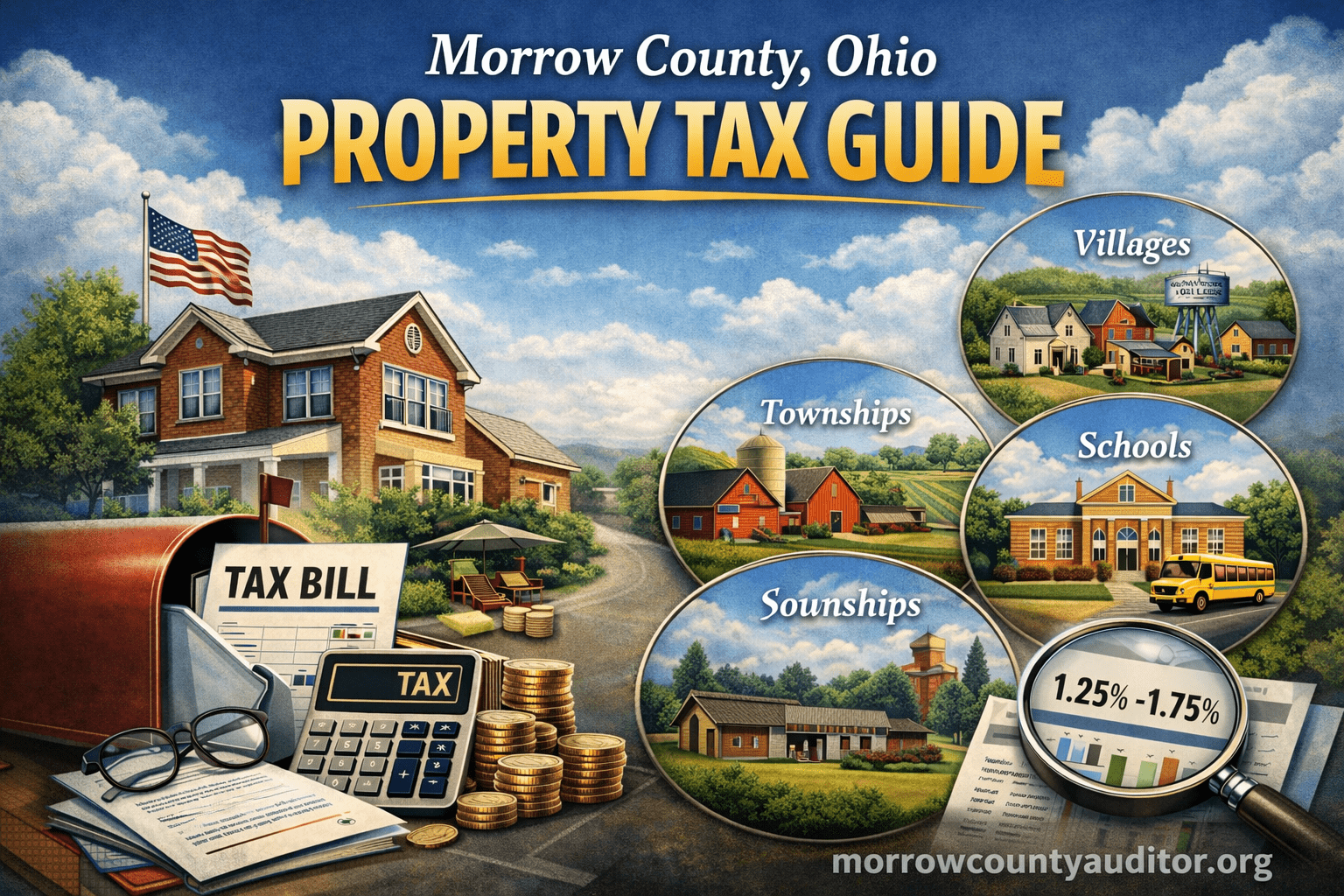
Property tax rates in Morrow County typically range from 1.25% to 1.75%, depending on your village, township, and school district. School district levies make up the largest portion of the tax rate. Properties in villages usually pay slightly higher taxes than township properties due to additional municipal services and local levies.
How do I check my property tax bill in Morrow County?
You can check your Morrow County property tax bill by searching official county records using your owner name, property address, or parcel ID. These records show assessed value, tax rates, payment history, exemptions, and current balances, helping property owners stay informed and avoid missed payments or penalties.
When are property taxes due in Morrow County, Ohio?
Property taxes in Morrow County are generally billed in two installments each year. The first half is usually due early in the year, and the second half is due later in the year. Paying on time helps avoid interest charges, late fees, and potential enforcement actions.
What exemptions are available for Morrow County property taxes?
Common property tax exemptions in Morrow County include the Homestead Exemption, senior citizen relief, disability exemptions, veteran property tax benefits, and the CAUV program for agricultural land. These exemptions reduce the taxable value of a property and can significantly lower annual tax bills when applied correctly.
Can I appeal my property taxes in Morrow County?
Yes, property owners can appeal their property taxes through the Morrow County Board of Revision if they believe their property is overvalued. Appeals usually require evidence such as recent comparable sales, property condition issues, or errors in assessment records, and successful appeals may reduce taxes for future years.
What happens if I don’t pay property taxes in Morrow County?
Unpaid property taxes can result in penalties, interest, tax liens, and possible foreclosure. If you’re unable to pay on time, contacting the Morrow County Treasurer early may help you explore payment options and avoid serious legal or financial consequences.